
One of the most common and costly assumptions European brands make when approaching the American equestrian market is that riders are riders. The logic seems reasonable on the surface — they all ride horses, they all need equipment, they all exist somewhere on the luxury spending spectrum. Build a strong brand, price it correctly, place it with the right retailers, and the market will sort itself out.
It won’t. Because hunters, jumpers, and dressage riders are not the same customer. They have different aesthetics, different purchasing triggers, different trainer ecosystems, and in many cases different retailer networks. A brand that fails to understand these distinctions will find itself with product in the wrong stores, marketed with the wrong language, and positioned against the wrong competitors.
The Hunter Market
The hunter discipline is the most aesthetically conservative corner of American equestrian sport. Tradition is not just valued here — it is enforced. The look of the hunter rider has been largely stable for decades: tailored coats in muted colors, tall boots with a specific silhouette, understated breeches, minimal ornamentation. Deviation from the established aesthetic is not rewarded in the show ring and is not embraced in the tack room.
For European brands, this creates a specific challenge. Products that lead with innovation, bold colorways, or design-forward aesthetics — which play well in European sport horse and jumping markets — frequently land flat in the hunter world. The hunter buyer is not looking for what’s new. They are looking for what is correct, what is traditional, and what the most respected trainers and riders in their discipline are already using.
Heritage positioning works exceptionally well here. A European brand with genuine history, classic construction, and understated presentation has a natural entry point into the hunter market — provided the product meets the specific aesthetic standards of the discipline and is introduced through the right trainer relationships.
The Jumper Market
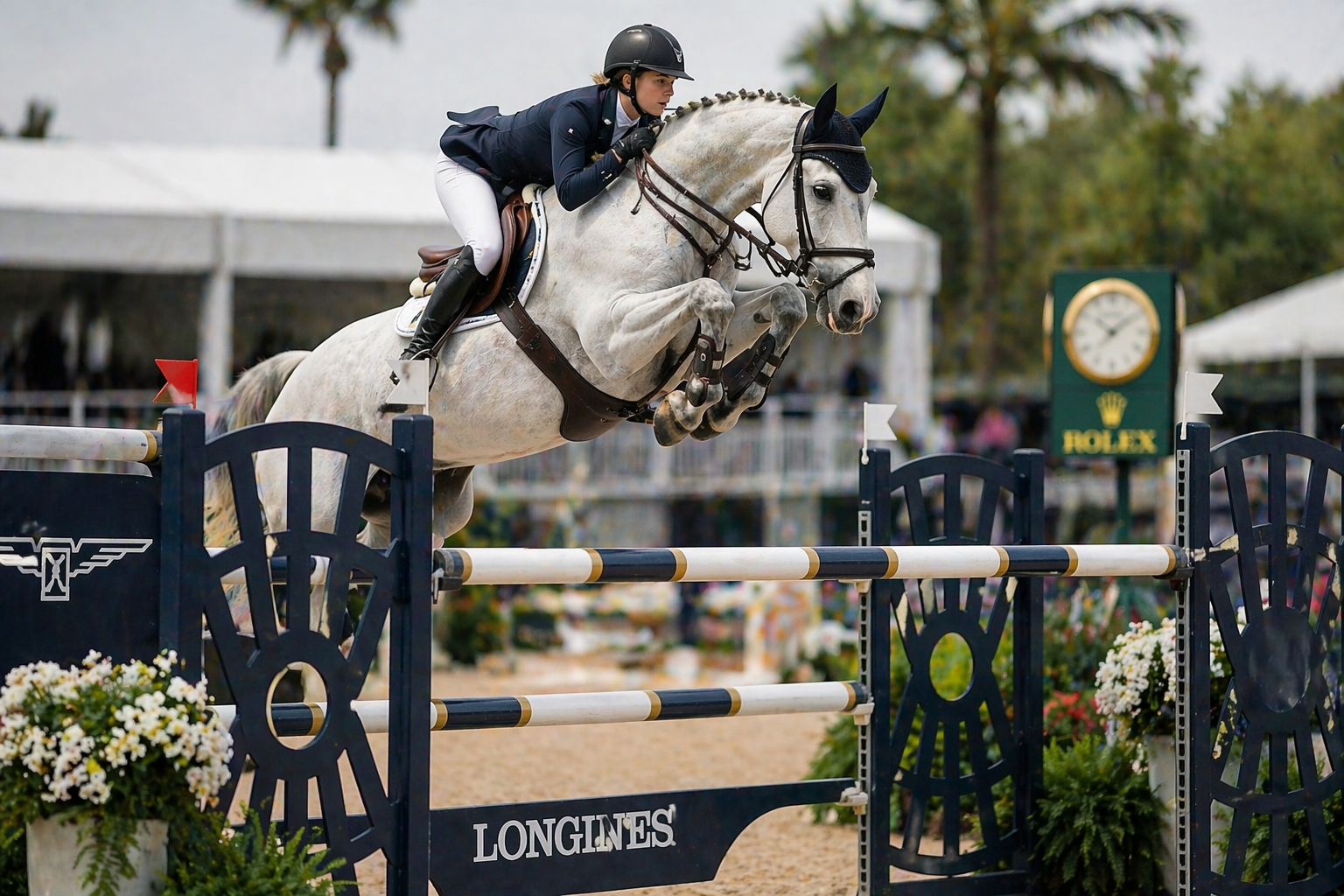
The jumper discipline sits at the opposite end of the aesthetic spectrum. This is where European sport influences land most naturally in the American market. Jumper riders follow the international circuit, watch European Grand Prix competition, and are acutely aware of what top riders are wearing and using at the highest levels of the sport. A brand worn by a prominent European competitor carries immediate credibility in the American jumper community in a way it simply does not in hunters.
The jumper buyer is more open to innovation, more receptive to technical performance claims, and more willing to adopt new brands when the right signal is attached. Color, design detail, and visible performance features that would be disqualifying in hunters are neutral or positive in jumpers.
This is the discipline where most European brands find their first American foothold, and for good reason. The cultural overlap is genuine. The challenge is that the jumper market — particularly at the amateur level — is also more price-sensitive than it appears from the outside. The high-net-worth jumper owner and the serious amateur are different buyers, and a brand needs to be clear about which one it is actually targeting.
The Dressage Market
Dressage occupies a distinct position in the American equestrian landscape — smaller in volume than hunters or jumpers, but with a buyer profile that skews heavily toward European brand affinity. Dressage riders in the United States have always looked to Germany, the Netherlands, and Scandinavia as the definitive sources of excellence in their discipline. European origin is not just acceptable in this market — it is actively preferred.
The dressage buyer is also among the most educated equestrian consumers in the American market. They research extensively, they follow European competition closely, and they make purchasing decisions with a level of deliberateness that differs from the impulse-adjacent buying that happens in a busy show vendor tent. They want to understand what they are buying and why it is worth the price.
For European brands entering through the dressage channel, provenance and technical credibility are the primary purchase drivers. A brand with legitimate German, Dutch, or Scandinavian heritage entering the dressage market is pushing against an open door — provided the product is genuinely excellent and the brand story is communicated with appropriate depth.
Why This Distinction Shapes Everything
The discipline segmentation of the American equestrian market affects which retailers matter, which trainers carry influence, which trade shows are worth attending, and how a brand should be positioned in every piece of communication it produces. A retailer that dominates the hunter market may have minimal reach into dressage. A trainer whose endorsement moves product at jumper shows may be entirely unknown in the hunter barn down the road.
European brands that approach the US market with a single positioning strategy and expect it to work across disciplines are not just leaving opportunity on the table. They are actively undermining their chances in each discipline by appearing to belong to none of them.
The brands that succeed in the American market do so by making deliberate choices — this discipline first, this retailer network, this trainer community — and building from a specific foothold rather than attempting to be everywhere at once.
Bridgeway Equestrian Group
We know the American equestrian market at the discipline level. We know w